Your members joined for the value of the network. Belonging to the same organization does not make it easy to reach out, ask for twenty minutes, or follow up a week later. Member Engagement removes that barrier: it makes the introduction, tells each side exactly why the other is worth their time, and carries it through.
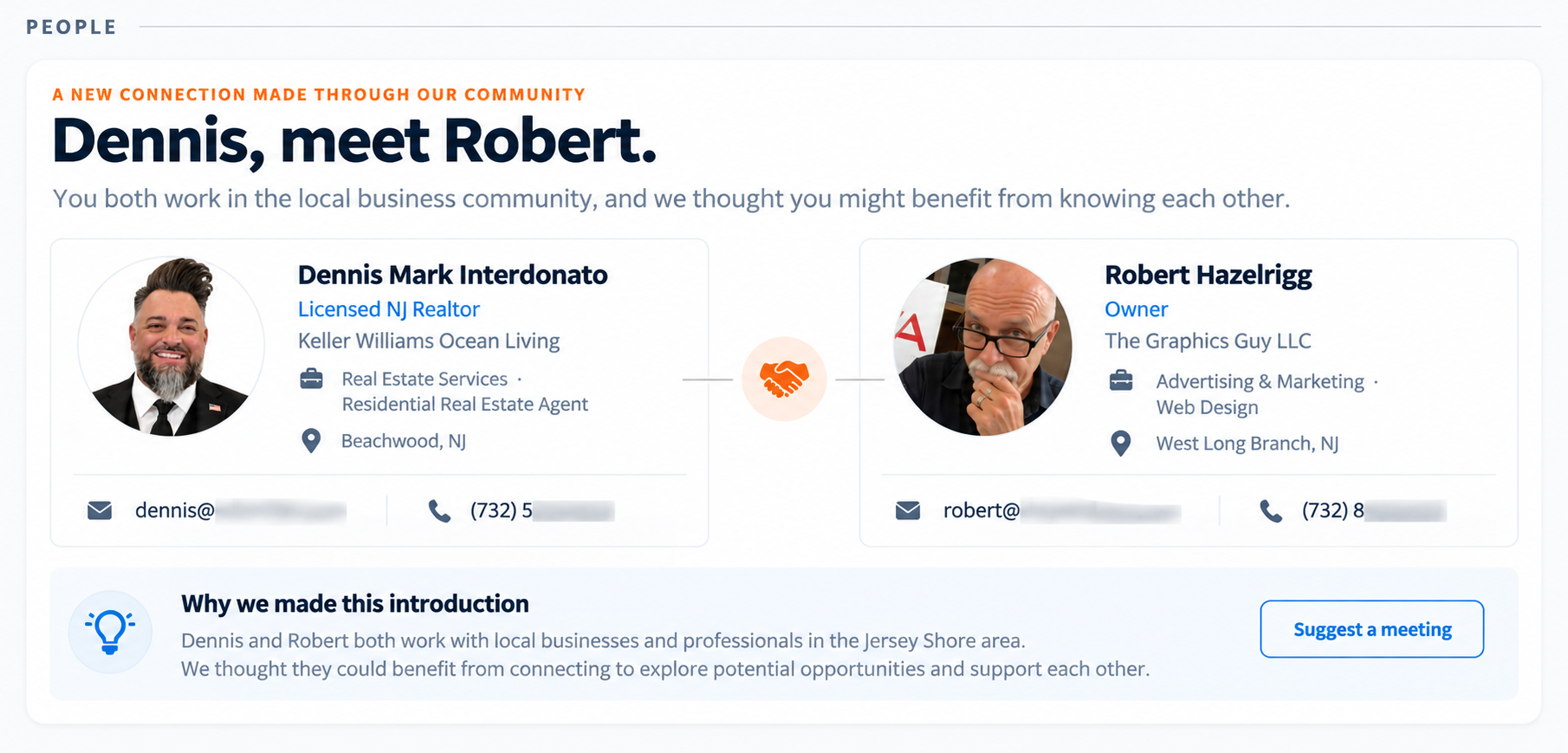
An introduction made this morning. Both sides get the reason, not just the name.
Built on Segwik 3.0. Your chamber gets an account, and that is the whole setup.
Members do not log in to anything. It reaches them in the inbox they already read.
Your dues system, your database and your website carry on exactly as they are.
You have already done the hard part. You assembled the network, you fill the room, you keep the calendar running. But belonging to the same organization does not make it easy for one member to start a conversation with another, ask for a meeting, or pick it back up two weeks later.
We call the gap between the two member connection friction. It is not that your members are shy or incapable. It is structural — and structural is the kind of problem an association can actually solve.
Every one of these is a reason a member renews or does not. Member Engagement is built to remove them one at a time — by making the first move on the member's behalf, giving both sides a reason, and following through afterwards.
We have members who could benefit from knowing each other, and they are not connecting.The missed opportunity
Our most outgoing members get the most value. The quieter ones stay on the sidelines.Participation equity
We can provide the introduction. We cannot always help members take the next step.Follow-through
Members do not always recognize the value of the network they have joined.Perceived value
The same reasoning, surfaced as a card a member actually taps — with one button that does the asking for them.
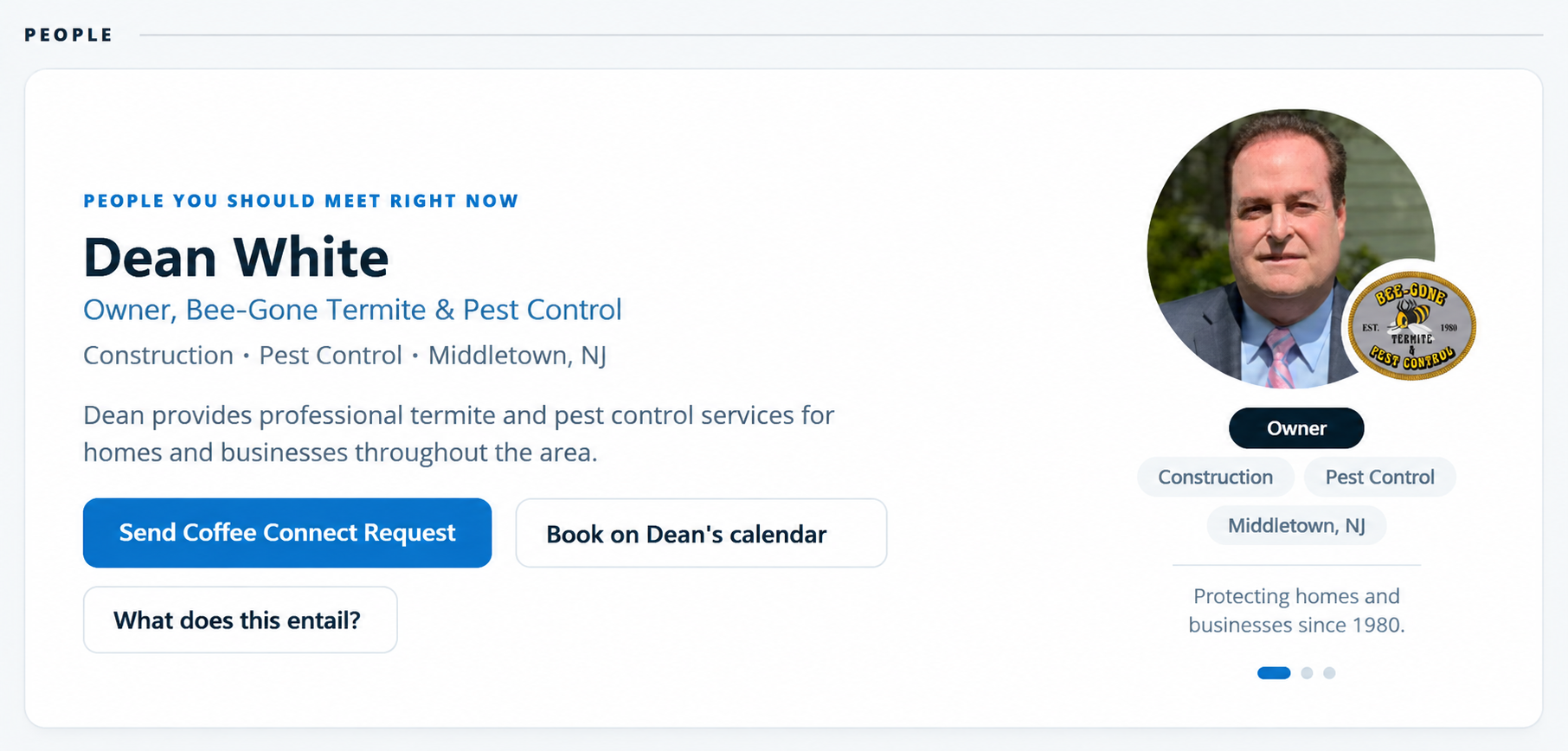
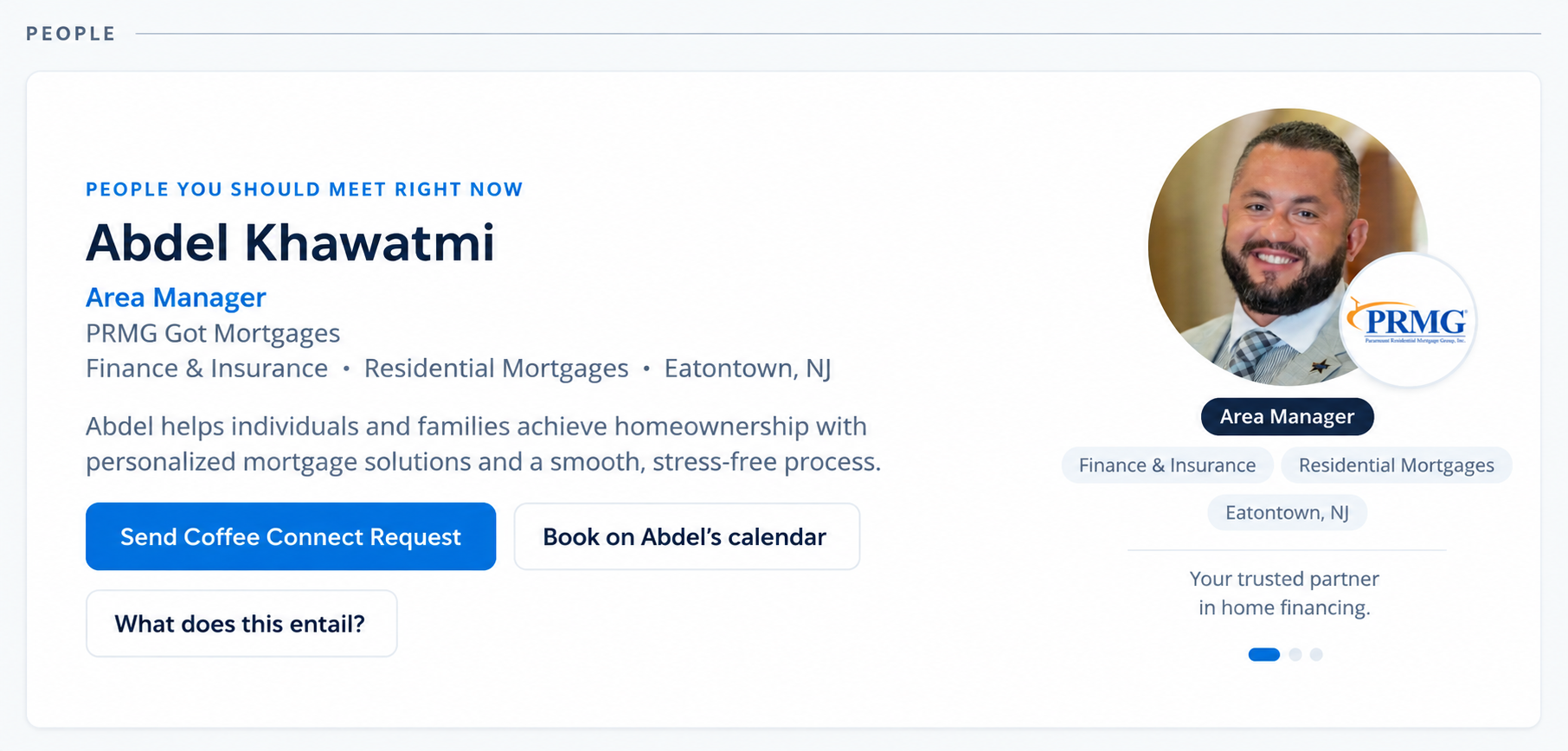
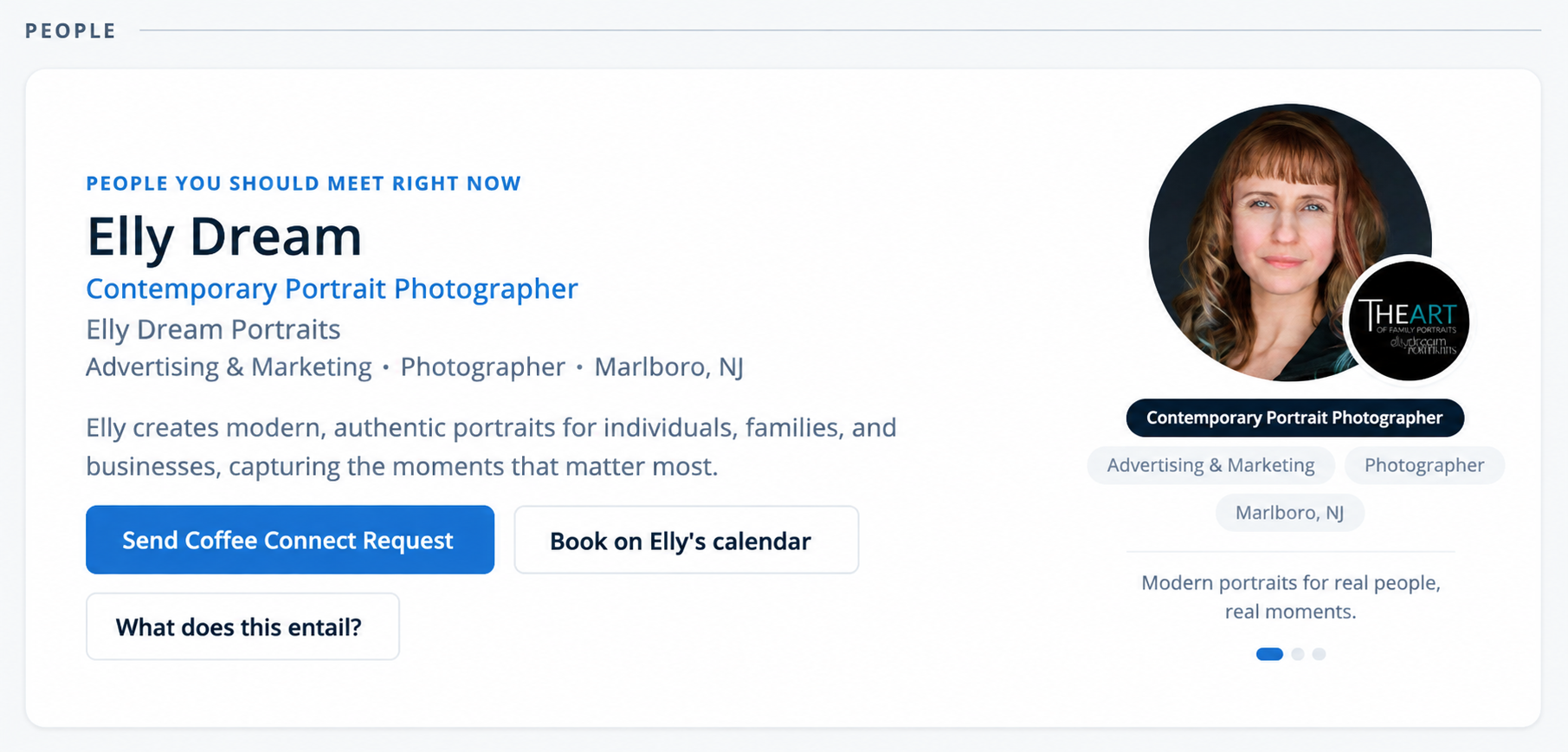
It manages the connections between your members — who should meet, who is in the room, and what happened afterwards. That is the whole job.
Built on Segwik 3.0, the same platform individual members already use. Nothing to install, nothing to host.
One account for the organization. Your staff runs it; you are not buying licenses for every member.
Upload your list or invite as you go. Members do not need an account of their own for any of this to work on them.
Segwik reads the network and pairs people who should know each other, with the reason attached to every suggestion.Removes the first move & the cold introduction
Before every event, each member finds out who is coming that is actually worth their time — so the quiet member walks in with the same three names as the confident one.Closes the confidence gap
The nudge afterwards is where most introductions die. Segwik carries it through and reports back what came of it.Stops the post-event drop
Every message goes out under your organization's name. Members do not have to log into anything, learn anything, or adopt anything for it to work on them.
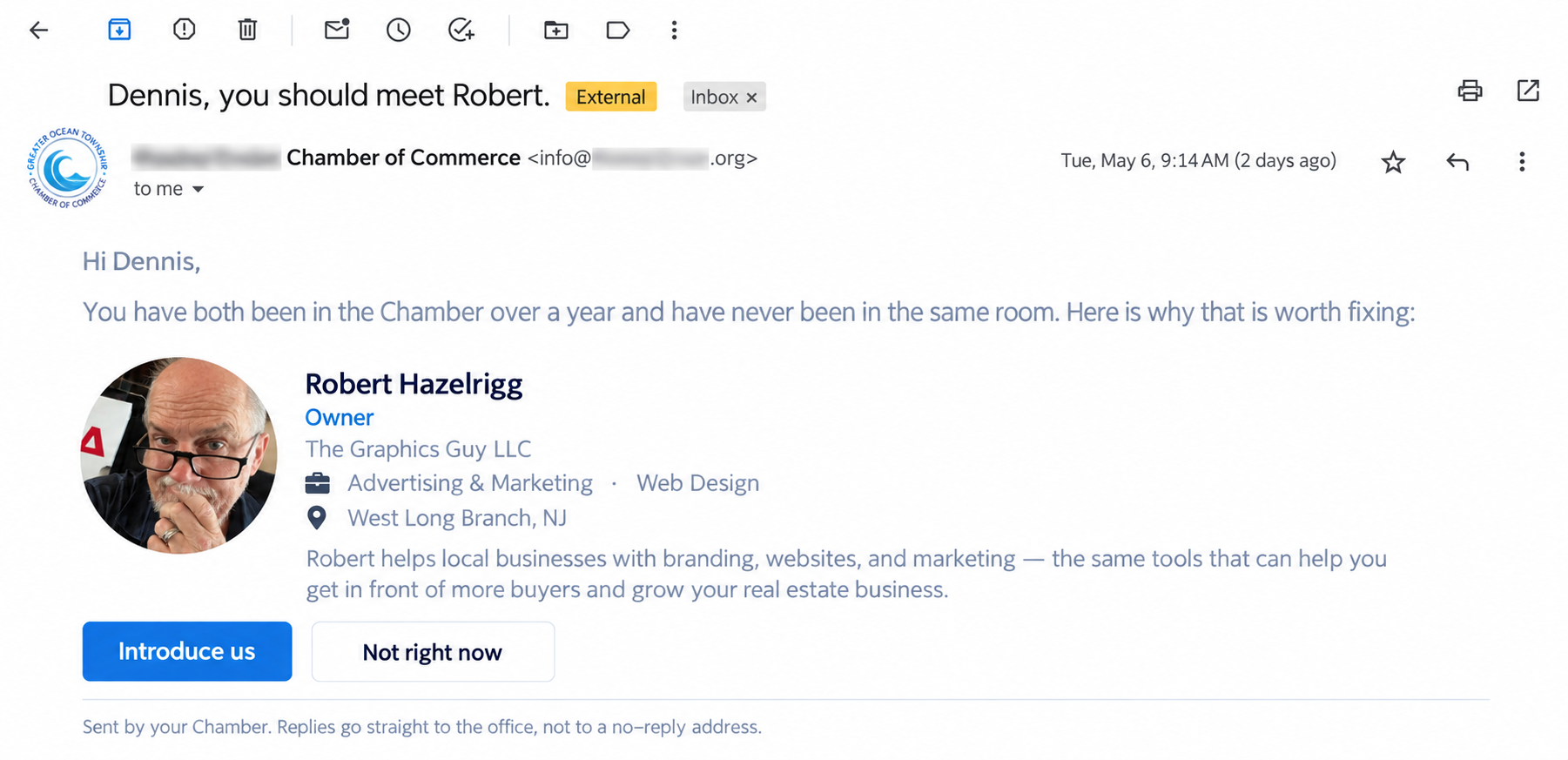
An introduction, sent by the Chamber
Anyone can hand a member a directory and tell them to network. Segwik reads the network first — what people do, who they already know, where the useful gaps are — and only then makes the suggestion.
The reason travels with it. That is the difference between an introduction a member acts on and one they archive.
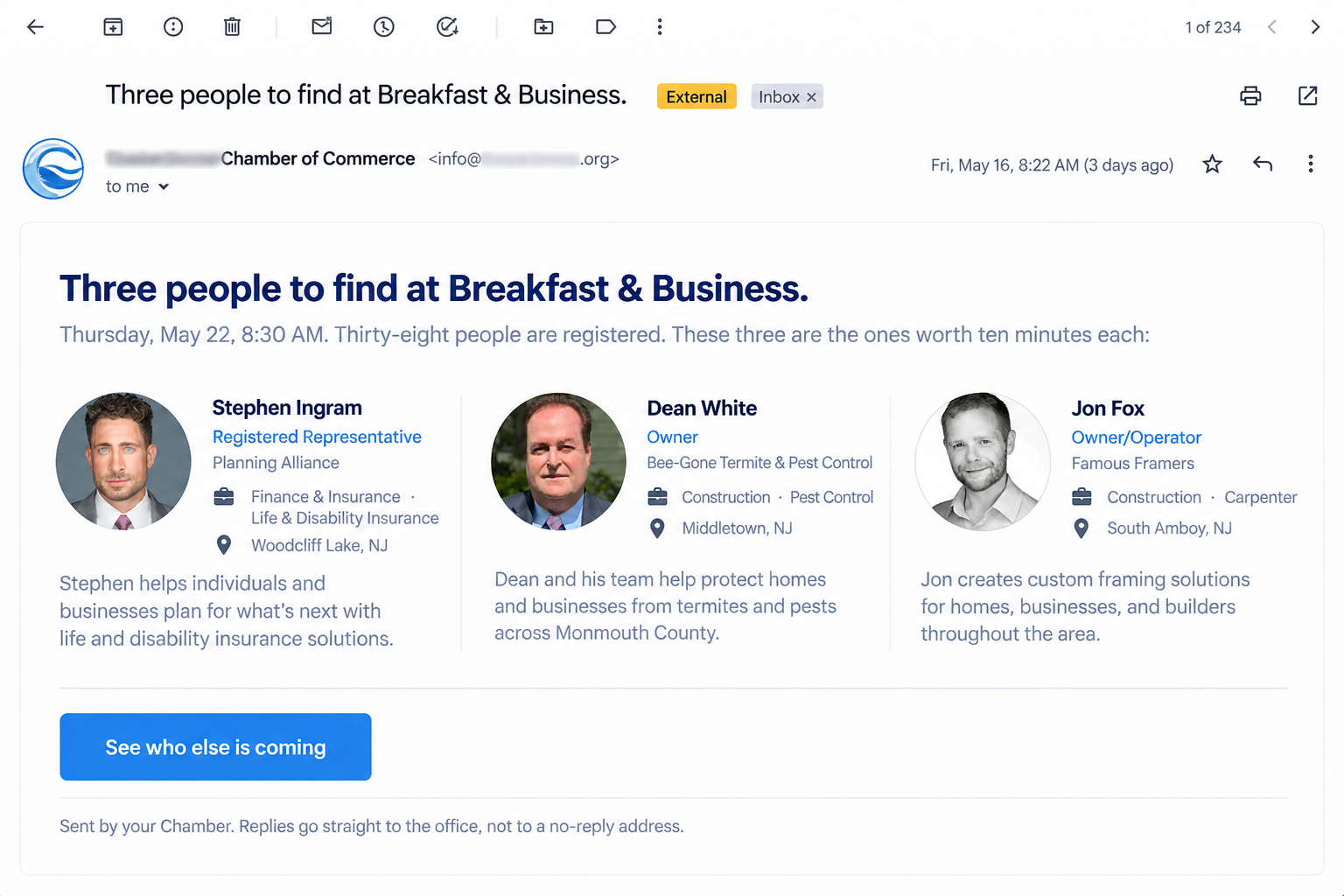
Who to find at the next event
Attendance is the number every chamber reports. What happens inside the room is the number that decides whether people renew.
Each member arrives already knowing the two or three people worth finding — including the new member nobody has brought in yet.
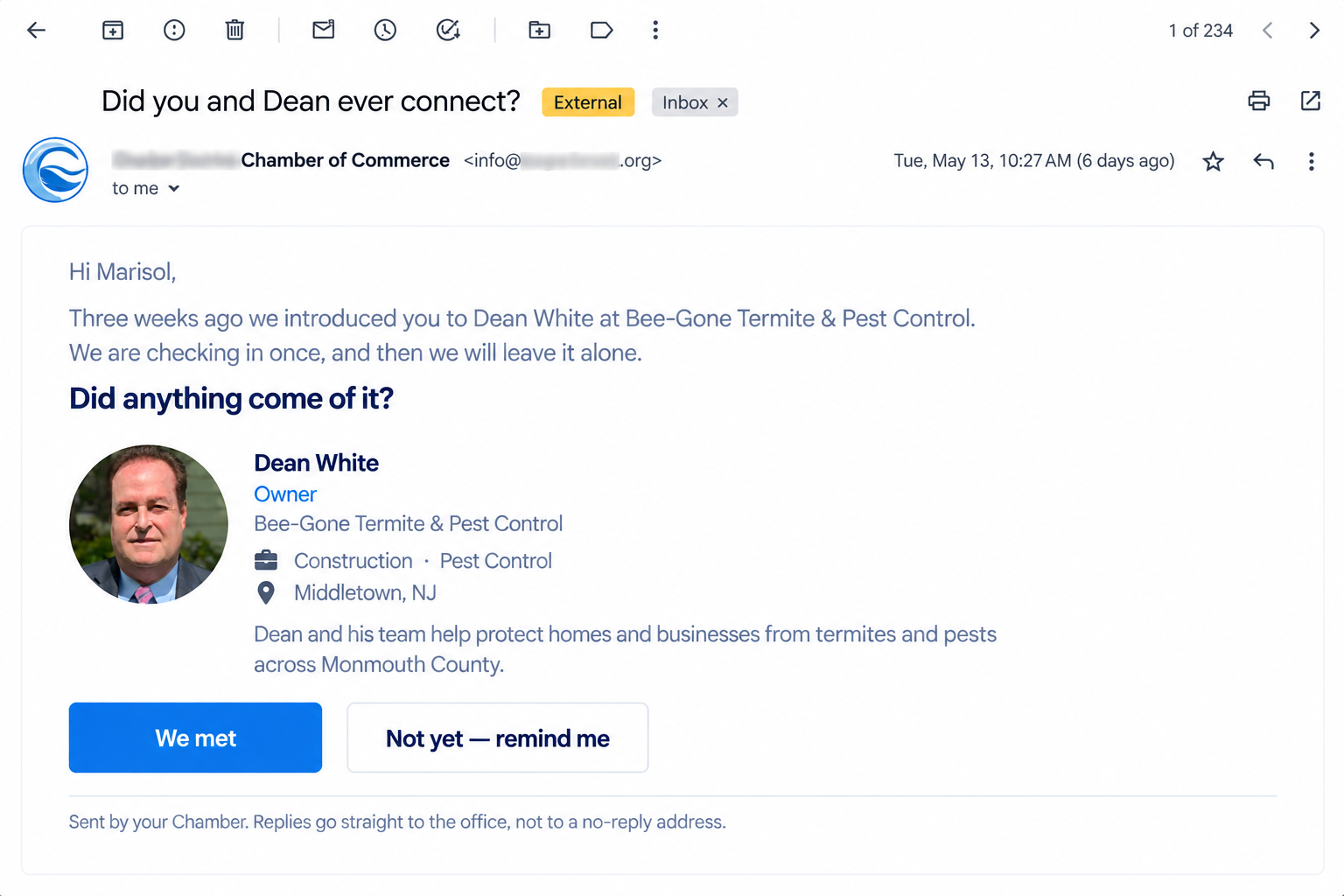
The check-in, three weeks later
Most introductions die quietly a fortnight later, and nobody ever finds out. One check-in, asked once, changes that.
It also gives you something no chamber has ever been able to put in a board report: how many introductions turned into actual business.
A 600-member chamber does not buy 600 Segwik accounts. The organization pays for the network. Members create their own account only if Segwik becomes useful to them personally.
Price follows the size of your network, not how many people logged in. Getting members active is the whole point — it should not be the thing that costs you more.
Keep your member database, your dues system, your website. Member Engagement sits alongside all of it and leaves it alone.
That is genuinely the first question. Pricing follows your member count, in four bands, and the whole conversation is short.
